This blog is DigitalUs Media’s library of practical SEO guides: technical SEO and indexing, link building and negative SEO, content and keyword research, and SEO strategy. It’s written for marketing managers and business owners who want to grow through search, often in more than one market, and who want to understand what’s happening on their own site.
The articles are grouped into four topics. Each topic page lists all of its guides, followed by a short reading order and answers to common questions.
Technical SEO and indexing
Guides to crawling, indexing and the statuses in Search Console’s Page indexing report. The Technical SEO and Indexing section opens with the technical SEO audit checklist, the 40 checks we run in order.
Link building and negative SEO
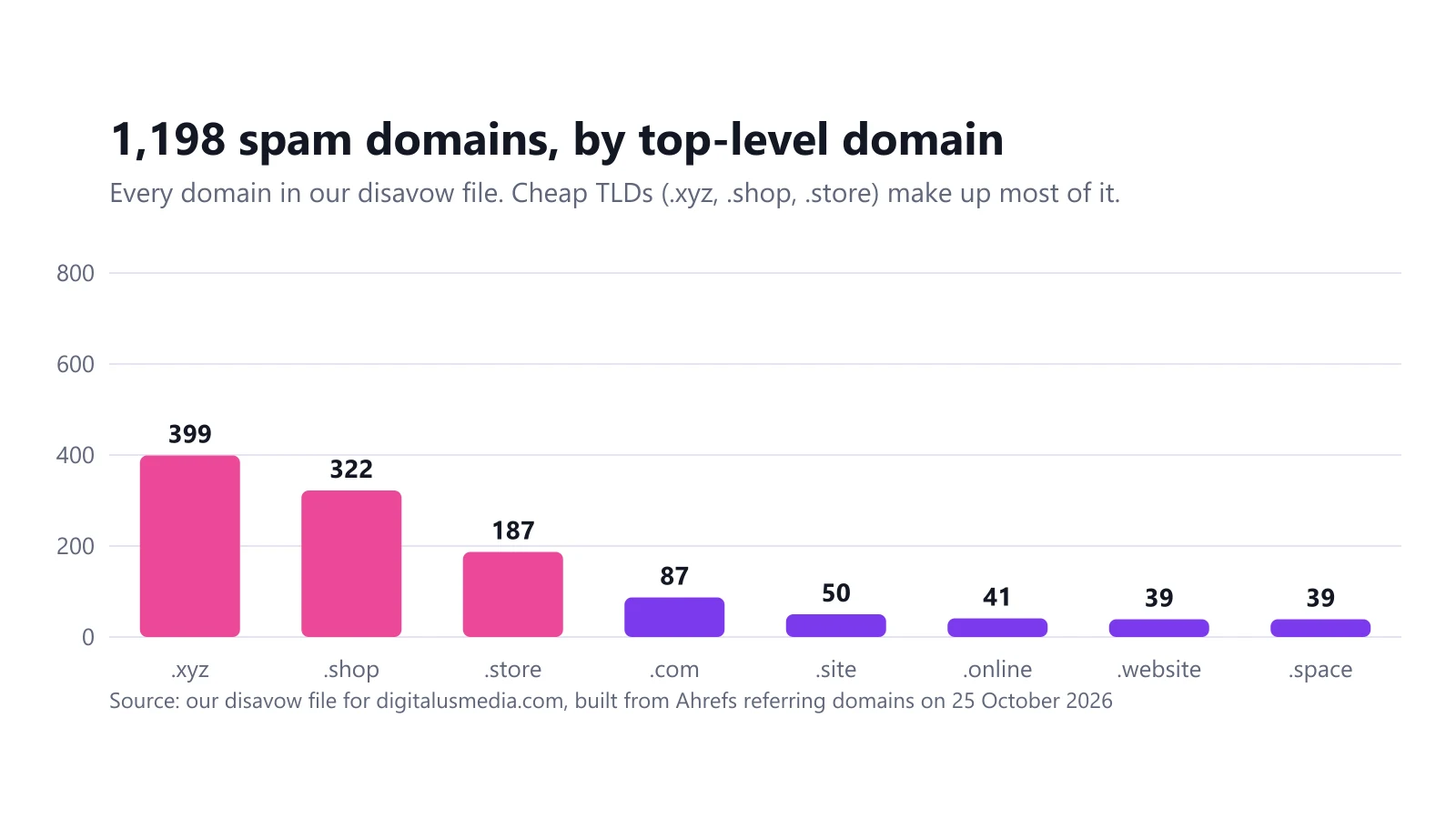
How sites earn links that count, how to recognize spam links and when a disavow file actually helps. All of it is collected under Link Building and Negative SEO.
Content and keyword research
Keyword research, content audits and writing pages that people and AI answers can use. Browse every guide under Content and Keyword Research.
- What a content audit is walks through the keep, update, merge, redirect or remove decision, using our own site as the worked example.
SEO strategy for businesses
Planning, hiring and measuring SEO, for the people who make the decisions. These guides sit under SEO Strategy for Businesses.
- SEO for small businesses covers what you can do yourself first: a clear website, a Google Business Profile and Search Console.
- How to choose an SEO agency gives 15 questions to ask and 8 red flags, starting with guaranteed rankings.
- SEO KPIs explains the 12 metrics that show whether SEO is working and where to find each one.
Our editorial standards
Google’s guide to helpful, reliable, people-first content asks whether content shows clear sourcing and first-hand expertise. Our writing brief turns that into rules every article follows:
- Primary sources first. Anything about how Google Search works comes from Google’s own documentation, Search Console Help or the original paper or specification. Each article ends with a Sources box listing the sources it relies on. Opinions from SEO tool blogs aren’t presented as facts.
- No invented data. No made-up clients, results, testimonials, quotes, percentages or “studies show”. If a fact isn’t in a primary source or in our own data, it stays out.
- Our own data, labelled as ours. The only first-hand numbers we use come from our own site: its Search Console and Ahrefs data and its move from WordPress to a static site. They are always identified as our site’s figures and used exactly as measured, including when they show SEO not working.
- Opinions marked as opinions. When a sentence is our judgment rather than documented fact, it says so (“In our view…”).
- Dates you can check. Every article shows its publish date, and an updated date when it has been revised. Google’s guidance warns against changing dates to make pages look fresh when nothing substantial changed, so an updated date here should mean a real revision.
- No promises we can’t keep. No ranking guarantees and no link packages. Google’s own advice on hiring an SEO says no one can guarantee a #1 ranking.
In our view, a guide is only useful if you can check where each claim comes from. If you’d rather have help than do the work yourself, each topic here connects to one of our SEO and digital marketing services.